
Humphreys County Arrest Records and Court Charges
An arrest record in Humphreys County captures the basic facts of a custody event. It usually notes who was arrested, the arresting agency, the date and place, and the offense the officer listed at the time. In this county the Sheriff's Department under Sheriff Bruce Williams handles most arrests, and the booking detail starts in law enforcement and jail files rather than in the court system. An arrest by itself is only an accusation. It does not mean a prosecutor has filed anything, and it does not mean a court has accepted the case.
The court charge record begins later, when the prosecutor decides the formal charges and files them with the clerk. From that point the charges become part of the public court file and move through the case. The booking side of the story, including the jail roster and custody status, sits with the sheriff and is covered on the Humphreys County inmate records page. The full case file with pleas, hearings, and the final outcome lives with the criminal court record. Keeping these court charges after arrest separate from the arrest itself avoids a common mistake, which is reading an early charge as a finished result.
How to Find Humphreys County Arrest Records and Charges
Humphreys County does not publish one combined arrest-and-charge website. Charges and their current status appear in the court file, while booking detail stays with law enforcement. For Circuit Court felony charges and many civil matters, the statewide access layer is Public Access Mississippi Electronic Courts, known as PAMEC. The Mississippi Judiciary routes public case access through that system, and the Circuit Clerk counter remains the reliable fallback for older, sealed, or non-digitized files.
- Decide which court holds the charge. Felonies move to Circuit Court after indictment or bind-over, while first appearances and misdemeanors stay in Justice Court.
- Search the court case index by the defendant's full legal name, or by case number when you have it.
- Open the case and read the charge list, noting each separate count as its own line.
- Check each charge's statute code, severity level, and current status before drawing any conclusion.
For the booking side, call the Sheriff's Department at 662-247-2551, since no county jail roster is posted online. Statewide, the Mississippi Department of Corrections inmate search covers people already sentenced into state custody.
The MDOC inmate search lets the public look up sentenced state offenders by name or MDOC identification number.
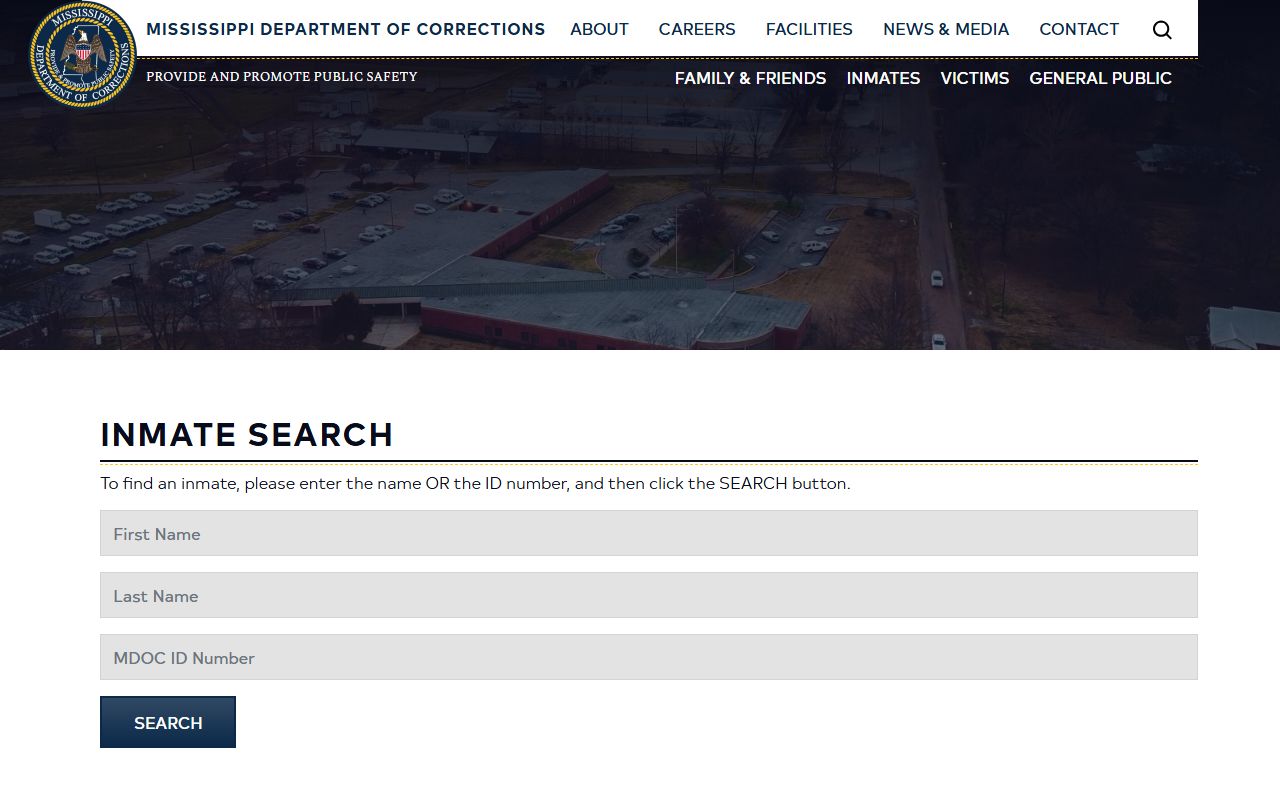
That tool helps when an arrest in Humphreys County has already moved through the courts into a state sentence, though it does not show fresh county bookings or the early charge record.
How Charges Get Filed After an Arrest
The charge record formally opens when the prosecutor files a charging document. The path depends on how serious the alleged offense is. A misdemeanor often starts with a sworn complaint or affidavit at Justice Court, where the person also gets a first appearance. A felony in Humphreys County usually needs a grand jury indictment before it can be prosecuted in Circuit Court, and the case may be bound over from a lower court while that review happens. The District Attorney for the 21st District, Akillie Malone-Oliver, files and pursues those felony charges in Circuit Court.
Three charging documents do most of the work. Each one starts the case, but they differ in who issues them and which court they belong to.
| Complaint | Information | Indictment | |
|---|---|---|---|
| What It Is | A sworn accusation or affidavit that an offense occurred | A formal charge filed directly by the prosecutor | A formal felony charge returned after grand jury review |
| Which Court | Justice Court or Municipal Court | Circuit Court | Circuit Court |
| Who Issues | Officer or citizen, often through the prosecutor | District Attorney | Grand jury, presented by the District Attorney |
| Common For | Misdemeanors and first appearances | Some felonies where allowed | Serious felonies |
Charge Codes and Severity Levels
Every charge ties back to a specific Mississippi statute. The court file lists the code section next to the charge so a reader can see exactly what was alleged. Mississippi sorts offenses into felonies, misdemeanors, and minor violations. A felony carries the heaviest possible penalties and is the kind of charge that reaches Circuit Court. A misdemeanor is a lower-level offense handled in Justice Court or Municipal Court.
One arrest can produce several separate charges at once. An incident might generate a felony count, a related misdemeanor, and a traffic violation, each with its own code and its own status. Reading a charge record means reading every count, not just the most serious one. The severity level also shapes where the case is heard, how a grand jury fits in, and what penalties a conviction could bring.
The code section matters when a person tries to confirm what was charged. Two arrests can look alike on the surface yet point to different statutes with very different ranges of punishment. The clerk's index and the court file both carry the statute reference, which is why the case number and the listed code are the anchors for any serious lookup.
Charge Status and What It Means
Charges rarely stay frozen. As a case develops, a prosecutor may amend a count, reduce it to a lesser offense, add a new one, or drop it entirely. The court file tracks these moves through status flags. Mississippi Electronic Courts uses labels such as Nolle Pros Pending, BOUND OVER, and Plea Pending that tell a reader exactly where a charge stands at that moment.
| Status | What It Means |
|---|---|
| Pending | The charge is filed and open, with no final outcome yet. |
| Amended | The prosecutor changed the wording or the statute behind the charge. |
| Reduced | The charge was lowered to a less serious offense, often by agreement. |
| Dropped | The prosecutor decided not to move forward with that count. |
| Dismissed | The court ended the charge, by motion, agreement, or lack of evidence. |
| Nolle Prosequi | A formal prosecutor decision not to pursue the charge any further. |
| Bound Over | A lower-court matter was sent up to Circuit Court for felony prosecution. |
Note: A dropped or dismissed charge can still appear in the public file as part of the case history, even though it did not lead to a conviction.
Statewide Charge and Criminal History Lookups
Local court files cover Humphreys County cases, but charges connected to an arrest can also roll up into statewide systems. The Mississippi Department of Corrections inmate search reports people in state custody after sentencing. Mississippi VINE adds custody-status notification, which tells a registered user when someone moves in or out of custody. Neither tool is a full court docket, and both sit downstream from the charge record itself.
The state also runs its inmate lookup through a second public entry point that mirrors the same data.
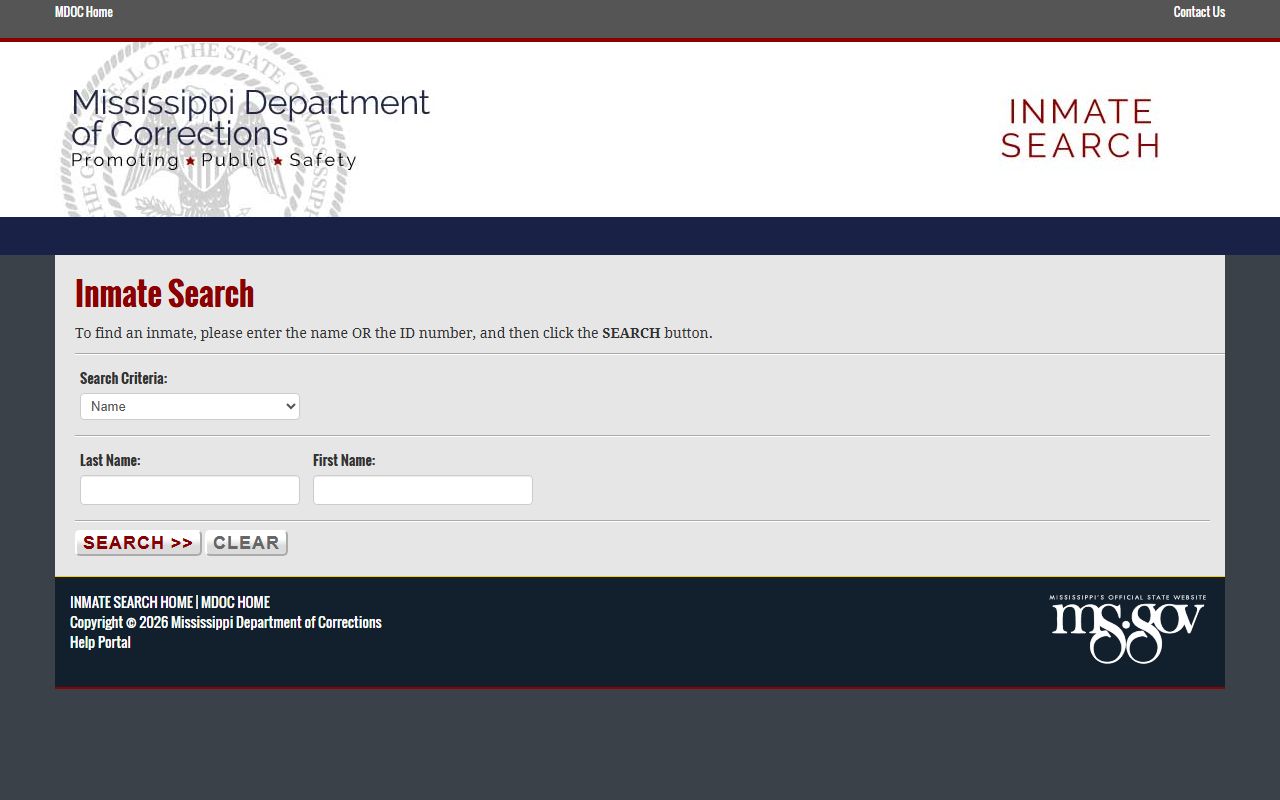
The MS.gov MDOC search screen exposes the same name and identification fields, so a Humphreys County name that has reached a state sentence can be confirmed there. For records that are public under the Mississippi Public Records Act, the originating office still controls copies and certification, so plan to start with the custodian that holds the file.
Charges vs. Convictions
Being charged is not the same as being convicted. A charge is an accusation that a prosecutor files. A conviction is the result reached only after a guilty plea or a verdict. Many charges are reduced, dismissed, or dropped before any case ends, so the presence of a charge in the record says nothing final about guilt.
| Charge | Conviction | |
|---|---|---|
| Stage | Accusation at filing | Verdict or accepted plea |
| Burden of Proof | Probable cause | Beyond a reasonable doubt |
| Decided By | Prosecutor and grand jury | Judge or jury |
| Public Record | Yes, once filed | Yes, with sentence |
Background Check Considerations
People reading arrest and charge records for a job, a lease, or a license should know the difference between a casual lookup and a regulated background check. A casual search of public court files can show what was filed, but it can also be incomplete, out of date, or missing the final outcome of a charge. A formal background check run for employment, housing, or credit must follow the federal Fair Credit Reporting Act and the rules tied to it.
The Mississippi Department of Corrections also keeps a records office for questions about sentenced offenders and custody history.
The MDOC contact page lists the records department for time-served, eligibility, and custody questions that fall outside a county court file.
Important: Charge data pulled from private lookup services is not a consumer report under the FCRA, so it may not be used for credit, employment, tenant, or insurance decisions.
Sealed vs. Expunged Charge Records
Mississippi limits public access to some charges. A sealed file is hidden from ordinary public view but still exists, while an expunged record is removed from public access and treated, for most purposes, as if the charge never happened. Mississippi Electronic Courts uses both SEALED and EXPUNGED flags, and a file marked either way may show little or nothing to a public searcher.
| Sealed | Expunged | |
|---|---|---|
| Visibility | Hidden from public view | Removed from public access |
| Law Enforcement | Limited access remains | Very limited access |
| Eligibility | Set by court order and statute | One eligible conviction after five years, with exclusions |
Expungement in Mississippi runs through the court that handled the charge, under Miss. Code Ann. 99-19-71. The Mississippi Delta District Attorney page explains that an eligible conviction may be cleared five years after a person finishes all sentence terms, with listed exclusions. Dismissals, nonconviction outcomes, and first-offender cases follow their own rules, so eligibility always depends on the charge type, the prior record, and the exact court.
Restricted Charge Records in Humphreys County
Not every arrest or charge is open to a public search. Youth court records are confidential by Mississippi law and should never be treated as ordinary lookups. Sealed charges, expunged charges, and matters tied to ongoing investigations may be withheld or shown only in part. Some details inside an otherwise public file, such as minor-child names, financial account numbers, and certain exhibits, are redacted before release.
When a charge does not appear where a searcher expects it, the reason is often timing or restriction rather than error. Booking and charge information update on different schedules and live in different offices. For arrest or warrant questions tied to a charge, the Sheriff's Department and the issuing court are the right contacts, and the warrant records page covers how active warrants connect to a filed charge.
The safest approach treats arrest, charge, and conviction as three different facts that can each change over time. An arrest can occur without a charge. A charge can be filed and then dropped. A conviction follows only when a court accepts a plea or returns a verdict. Confirming the current status with the clerk that owns the file keeps a reader from acting on a result that has already moved on.